Thursday, May 30, 2013

Breathing, with attention

image compliments of merchantcircle
As I wrote yesterday, I have actually been adding pranayama into my day.  Pranayama is conscious breathing - breath that increases the prana, or life force, or vital energy in the body.

I consider adding anything new to my routine to be a huge lift.  If that might be the case for you...

Here are some things that have helped me actually do this:

  1. Anywhere from two to ten minutes is all you need.  
  2. Experiencing the techniques and effects of different breath practices, combined with appropriate asana preparation, creates a solid foundation for taking pranayama "on the road".
  3. Practice, practice, and did I say practice some more?
  4. Whenever you do manage to affect your nervous system with a breath practice, make conscious, if not written, note of how you feel, and the fact that you created that shift.
  5. Try again.
Sometimes, at work, I look at the clock on my phone and give myself 2-3 minutes to gather and center, I try to close my eyes and be still, and know that just a little bit of stillness may have an effect on my day.  I usually choose to breathe in for two (counts) and out for three (counts).  I create little pauses at the "top" and "bottom" of the breath.  I sit with my eyes closed, facing inward at my cubicle.  I focus on chest expansion on inhale and gentle contraction of the low abdominal muscles on exhale.

I am lucky enough to have time to practice a full sequence that prepares me for 10-12 minutes of expansive pranayama in the middle of the day.  I do a brahmana breath practice, where I build to 10-8-10-0, that is,  10 seconds in, 8 seconds retain, 10 seconds exhale.  It leaves me feeling noticeably more calm and focused for my afternoon at work.  Asana is really a key preparation for the spine to allow the pranayama practice to sink deeper.  However, we don't always have time or space for preparation.  It does make a difference.  And, learning pranayama using asana sequences for preparation allows the knowledge of the effects created to sink more deeply into the mind and body.  

I think the hardest time to utilize these tools, is, unfortunately, when you need them most.  I can get worked up in a panic, or be very anxious concerning... well, it's usually a commitment I've made that was the straw that broke the camel's back!  This excessive spinning of the mind starts to release fight or flight hormones, as I feel somehow backed into a corner.

SEND IN THE PRANAYAMA!!!

It can soothe the sympathetic response from the autonomic nervous system (ANS), and activate the parasympathetic "rest and digest" system.  Especially when we choose the appropriate breath practice - which in this case, is langhana, or reducing.  In general, lengthening exhale is a good choice.  However, no matter what breath practice you do, if you can get your attention from your head to the breath's affects on the spine, that's the key.

Practice, practice, practice, and notice the impact of pranayama when I'm feeling well enough to remember to use it!

Then, I hope to follow my own advice next time I work myself into a tizzy.  This is when I need the tools the most, and when it's hardest to reach for them.

Namaste!


Wednesday, May 29, 2013

How I've been breathing... since April

image compliments of gardenblog

Sounds interesting, doesn't it?  How have you been breathing since April?

Normally, we don't pay much attention to our breath.  Even those who practice yoga may not stay with the breath throughout an entire practice, let alone an entire day!

Well, I am just like everyone else.  I don't pay that much attention to my breath.  However, thanks to my training in the American Viniyoga Institute Foundations Program, I've learned a great deal about my breath.  I'm able, with this training, and a great deal of willpower, to occasionally take pranayama breaks during my day.  I also try to do pranayama with every asana practice, though sometimes life intervenes there as well!

When I get anxious, I tend to knot up right around my solar plexus (center below the ribcage).  This shuts down lung capacity and movement, and my breath gets shallow and fast.  I also activate all the muscles that are healing from Bells Palsy (facial paralysis - that came with the birth of my son two years ago).  This undue tension is quite uncomfortable... but I didn't know that, or the fact that I had really strong chronic tension in my upper body.  I didn't know until I was able to contrast it with the expansive feeling that comes with a deep breath practice supported by asana.

I have a number of practices that I return to regularly.  
- A steady build towards this ratio: 10-10-10-10 using a metronome on my cell phone
That is, 10 sec in - 10 sec retain - 10 sec exhale - 10 sec suspension.
(Sometimes I get there, often times I end up at about 10-6-10-6 or 10-8-10-8)
- A very basic langhana ratio (reducing) ratio of 2-1-3-1
This one is great for an office setting with an unknown period of uninterrupted time
- Nadi Sodhana
This is an alternate nostril breath that helps balance me and gets me out of my thoughts and into my body.  This breath stimulates the nadi-s on the right and left sides of the body, part of esoteric anatomy.  And theoretically in that system, opening up the right and left nadi-s is a precursor to proper energy flow in the central channel.  This is the highest, most unobstructed form of energy, and yields tremendous personal power.

I'm just a beginner, of course, so I don't exactly have all of my superpowers yet.

I'll post more on how these practices affect my day, shortly.

Tuesday, May 28, 2013

The rushing water

Image compliments of www.footage.shutterstock.com

The water rushed down from the mountains this wet and rainy Memorial Day weekend.   Taking a walk through the rain was one of the most invigorating parts of my weekend.  The narrow, dry beds turned into roaring, exploding, and strong versions of themselves.  I was inspired.  I hope continually for most benevolent outcomes for all beings.  I hope to respect who I truly am.

Friday, May 24, 2013

Change

image compliments of floweropera

Riding in and out on the days of change.
I try to hold on through the waves.
But there is nothing to hold onto.

How can I find my bliss?  My gentle voice?
My gentle touch?

I know the tide will turn, and the soft waves of 
admiration, kindness, and sweetness will come 
rolling back in.


p.s.  that is not my child.  just a whimsical and wonderful kid somewhere.

Thursday, May 9, 2013

DOAS: Conception

Image compliments of rosybee

Diary of a Viniyoga Student - Conception of the Moving With Grace Final Project

I will discuss the conception of the series developed for the final project of Foundations for Teaching and Yoga Therapy at the American Viniyoga Institute (AVI).

I intended to use the full range of skills I’ve learned thus far in my AVI training; asana, pranayama, chanting, and meditation.  I have two distinct populations that I serve, so I developed two distinct four-class series, one for each student population.  First, I wanted to teach breath in movement to serve the Bikram population.  I also taught a Viniyoga series to experienced Viniyoga practitioners.  This series will focused on deepening their experience of pranayama and adding chanting to the weekly Viniyoga class.  (This class has already encountered some counting-based ratio pranayama.)

Moving with Grace:  A four class series for regular Bikram practitioners at Geezum Crow Yoga in Montpelier, VT

The Bikram series is a fabulous workout; however, the class is so packed full of asana-s that there is rarely any time for explanation, demonstration, or real change in the understanding of the student. Specifically, the Bikram series and teaching style refer to muscles and to applying effort, but very little focus is on the breath.   The concepts of repetition and stay combined with learning the biomechanics of the breath could greatly augment the tool kit of the standard Bikram practitioner.

After a great deal of thought as to how I might teach new information in this wide variety of asana-s, I decided to follow an AVI format exploring the directions of movement.  When Gary taught us in the first unit of training, we focused on the directions of movement to learn how the breath is appropriately applied (with the intention of deepening the asana-'s desired effect.)  In the AVI training, we followed the format of forward bends, back bends, laterals, then twists.  I strayed from this sensical order so that I could meet the practitioners in familiar poses and build the vocabulary from there.)  Specifically, my first class focused on laterals, the second on forward bends, the third on back bends, the fourth focused on twists.  There are a great number of complicated asana-s that could use more attention and explanation.  A short list includes: half-moon (standing lateral), standing head-to-knee (standing asymmetrical forward bend), standing bow-pulling pose, cobra, floor bow pose, paschimottanasana, and ardha matsyandrasana (seated twist).   My concept was to break apart the Bikram series, and to teach a few different classes, each building on the last, in order to tackle some of the more difficult Bikram “goal” poses.  

To meet students where they are is a fundamental tenet of the Viniyoga approach.  Some aspects of the Bikram practice are important to note.  First, the 90-minute practice is performed in 105° heat and 40% humidity.  Secondly, there is a breathing “pranayama” (not what we would call pranayama in the Viniyoga world, but a breath practice all the same) at the beginning of class that takes a full seven minutes.  Thirdly, there is an approximately 25 minute “warm up” series at the beginning of class.  Fourthly, the first half of practice is done standing, then the practice transitions to floor work.  Lastly, it’s important to note that the Bikram series is exactly the same series of asana-s each time it is practiced.  I loosely conformed to the first four aspects of the Bikram class so that I could have a little flexibility in teaching with regards to the last point (same series each time).  I taught four different classes but did develop a standard warm-up, kept the temperature the same, and started standing before moving to the floor asana-s.  I did change Bikram’s “pranayama” but did keep a breath-centric focus for the first few minutes of class.

The Bikram community at Geezum Crow Yoga practices regularly, and is comprised of mostly 40-50+ year-old students.  The Bikram series, however, has many of the “obedience-building” aspects to it – specifically, it has many standing postures where feet are together, or heels are in one line.  Teachers are taught to instruct using language like “lock the knee” and “go beyond your flexibility.”  I told students in each class that there would be no language like this and that these guidelines for practice were what my series was meant to address.  We did asana-s maintaining hip width distance between the feet, and a slight bend to the knees was encouraged in order to protect the hamstrings while stretching the back instead.

In conclusion, I wanted to teach with as much integrity as possible, bringing the student a quality work-out experience while teaching fundamentals of breath in movement, using repetition and stay.  I kept a great deal of the structure of the Bikram sequence to provide familiarity to students learning something new, as they are so used to repeating the same thing over and over again.My current practice of the Bikram series is much different from the way I used to practice it before I learned the fundamentals of Viniyoga.  I have been documenting my changes on my blog entitled Moving with Grace (www.movinggrace.blogspot.com) and so I used this as the title for my class series.


Viniyoga with emphasis on chanting and pranayama: A substitute series for a Viniyoga class in Vermont
There is a wonderful licensed yoga therapist in the Viniyoga style.  She lives here, in Vermont, about ten minutes away.  I have known this therapist and teacher for a few years now and she has tapped me as a substitute teacher for her weekly Viniyoga class a few times.  During my first few classes, I was given a great deal of feedback to incorporate into my teaching.  Having gotten through that initial trial-by-fire, she asked me to teach four classes spanning April and May 2013 as part of a series designed to deepen the asana and pranayama (counting-based) practice by adding chanting.

This class is very special; there are up to six students at any time, and most of them are 60+ years old.  We find very different breath capacities, experience, and mobility in this group.  Many of these students have very limited mobility.  Issues we deal with in this class are severe spinal alignment issues, surgery post-cancer limiting shoulder range of motion, and generalized creakiness and joint instability due to age and various other conditions.  To add to this group, there is a student relatively new to practicing yoga at all.  I could share more but I do not want to share specifics of conditions for such a small group.

In this class, the students desire the yoga experience rather than a fitness-oriented work-out experience.  To address these needs, asana sequences need to be simple, accessible, and we need to “teach the modification” rather than the unmodified asana in many cases.  When modifying breath in asana or adding chanting, the challenge to the student must be managed carefully.  In addition, Sanskrit chanting can be challenging simply due to its foreign nature, not to mention its effects on the breath. 

The series consisted of four different classes exploring different pranayama ratios and techniques, and different chants in each.  Not only are the students limited in experience, but the teacher is also teaching much of this complex content for the first time.  So the need for simplicity within the classes was paramount.  Each class followed a floor-standing-floor format, and incorporated an average of eight asana-s.  Breath adaptation and chanting in asana are essential for preparing the student to use chanting (or internal mantra-style chanting) in pranayama practice.  The classes explore chanting in English (contentment, confidence, joy), one line chants like Om Jyothir Aham, and longer chants like Atma Hrdaye.  In addition, samana, brhmana and langhana ratios were all used, as was the technique of nadi sodhana.

This class series has given me a gift - the sequences I wrote for them are truly dear to my heart.  They are not about gymnastics at all and have been a tremendous teaching tool for me.  I now have these sweet gentle practices in my toolbox and I am looking forward to exploring them more in my own practice.  Of course, I practiced them before I taught them as well.

Friday, April 26, 2013

Diary of a Student - my VFP foundations final project


Stay tuned for updates on my final project!
I'm teaching a four class series for Bikram-ites - Viniyoga for asana-based practitioners to help them learn to breathe in the Bikram postures.  It's called Moving with Grace.
I'm also teaching a four class series on chanting and pranayama, with breath adaptation in asana to prepare for those practices.


Thursday, March 28, 2013

One truth, many paths Part 2 of 2

Image compliments of  Philosophy and Psychology
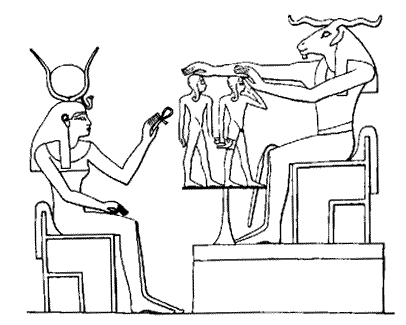
The Egyptian god Khnum is forming the future king with his right hand along with his spirit-twin, 
the Ka, with his left hand
If you haven't read part 1... you can find it here.

From about 500 BC (or earlier) to 1500 AD, cultures around the world turned inward.  Rather than continuing to look outward to nature and anthropomorphized deities of all kinds, multiple cultures came up with processes to help people understand their inner experiences and to help them change what they want to change in those experiences.  In other words, humanity began to see mastering the mind as the means for operating in an uncertain world. 
Julian James - Author of
The Origin of Consciousness
in the Breakdown of the Bicameral Mind
image compliments of  www.julianjaynes.org

Suffering is a universal struggle and has been for ages.  Around the world, the struggle inspired many different spiritual paths, but they all lead to the desire for freedom from suffering, whether it’s referred to as awakening, salvation, or freedom, just to name a few examples.  This includes the secularist struggle for and with meaning (see my Dad’s wonderful blog:  Hallowed Secularism).  From the Chinese philosophy of Lao Tzu to Jewish mysticism in the Kaballah, from the Yoga Sutras of Patanjali to the teachings of Buddha, the mystery of the mind came to the forefront of spiritual inquiry.  Remarkably, this happened cross-culturally around the world (learn more about “God-Consciousness” and the Bicameral Brain here.)
  

image compliments of
http://atmayogi-images.s3.amazonaws.com

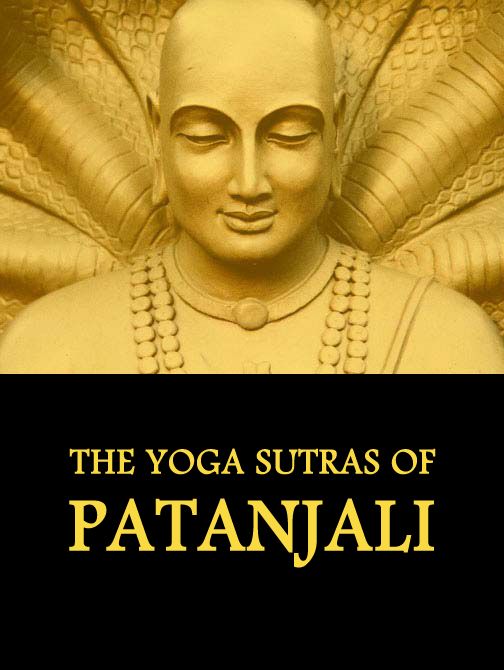
The yoga sutras of Patanjali, which we learned about and chanted in Sanskrit, were rejected by Hinduism, because they were non-theological.  That means they do not discuss religion, or “God” as a distinct defined entity.  The text examines the human phenomenon of seeking relief from suffering – and discusses how to find the knowledge that alleviates suffering.  I have been influenced by the clarity of this ancient text, and its insights that are applicable to my everyday life.  I have meditated on a Sutra (or short aphorism) that translates to: Deep meditation burns the seeds of suffering (dhyana heyah tat vrittayah). At the training, I crafted my own asana (posture) practice, followed by an alternate nostril breath practice (nadi shodhana), and finally about twenty minutes of meditation.  The physical and breath preparation allowed me to drop in to a comfortable meditation, where I felt no fear around what arose naturally in my mind.

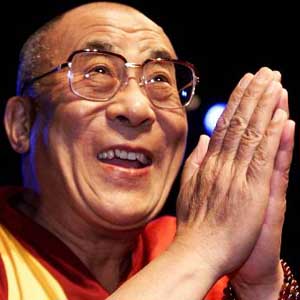
As a yoga practitioner new to the art of meditation, I recognized something in the countenances of both Pope Francis and His Holiness the Dalai Lama (see One Truth, many paths part 1One truth, many paths part 1).  With my limited experience in meditation, I have found that looking inward grants me sense of true relaxation and self-confidence in the face of self-doubt.  You might call this cultivating a sense of okay-ness within the craziness of the world.  This feeling comes when I connect with myself, below the level of my thoughts, feelings, and actions, as the source of unconditional awareness.   

Pope Francis I, intruduction
image compliments of talkingpointsmemo.com
H. H. the Dalai Lama compliments of writespirit.net
This act of looking inward is not easy or natural (for me, at least.)   I noticed a quality in these world religious leaders that I hope to cultivate in myself – a sense of allowing the mystery of the world.  To me, looking inward is not just a single action to be performed – it is comprised of three steps:  
  •          The willingness to turn inward
  •           The humility to ask
  •           The patience to listen

To quote The Aristos, by John Fowles:
                … below the surface, we do not know; we shall never know why; we shall never know tomorrow; we shall never know a god or if there is a god; we shall never even know ourselves.  This mysterious wall around our world and our perception of it is not there to frustrate us but to train us back to the now, to life, to our time being.
You can tell these world religious leaders (Pope Francis I and H.H. the Dalai Lama) have spent a lifetime cultivating a relationship with Mystery.  I have barely touched it but can’t wait to continue this path.  I aspire to be humble enough to stand in relationship to the mystery of this life and to all of the unanswerable questions.  I don’t know how this grants me a sense of existential relaxation, but I’m willing to practice more in order to experience it.
image compliments of http://the-kundalini.com